Source 2 layers eva splitting machine for Footwear, Sports, and Packaging
Find and compare 30 available 2 layers eva splitting machine options from verified suppliers. Evaluate key specifications such as PLC control, electric power, and CE certification to select the right equipment for your production line.
Key considerations
Products List


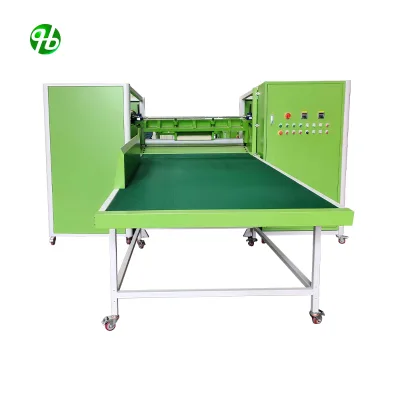
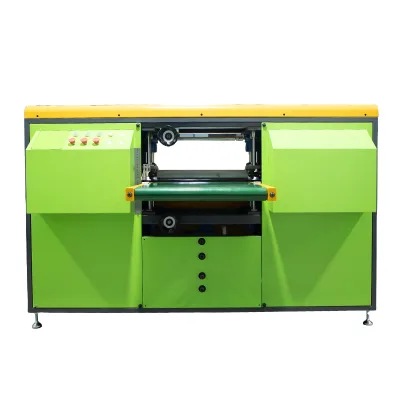


$3436.00 - $3748.00
Moq: 1


Comprehensive Sourcing Guide
2 Layers EVA Splitting Machine Sourcing Guide
A two layers EVA splitting machine is a specialized piece of industrial equipment used to slice EVA foam sheets and similar elastomeric materials into precise layers for footwear midsoles, insoles, mats, and molded components. Because EVA sheet splitting directly affects material yield and finished part thickness, buyers in the footwear and rubber products sector treat this purchase as a production-critical investment rather than a commodity buy. The listings observed in this category span a wide price band, from entry-level units around $1,999 to large-capacity systems approaching $69,000, which signals significant variation in width, automation, and cutting capability across the market.
This guide is written for procurement teams evaluating suppliers primarily in China, where most listings in this segment originate. It walks through the evidence available from product listings, the specifications that must be verified before contracting, the documentation trail needed for compliance, the commercial cost drivers, and the qualification and long-term checks that protect the investment. The intent is to give buyers a disciplined framework so that decisions rest on verified attributes rather than marketing language.
Product Scope and Observed Listing Signals
The listings in this category cluster around several identifiable machine families. Splitting machines appear in both vertical and horizontal structures, with heavy-duty builds designed for continuous production. Model references observed include units in the 1800 class, machines configured for 600mm widths, and models designated for splitting operations in shoemaking lines. Several listings describe the function explicitly as making vamps or supporting a shoemaking line, which confirms the footwear orientation of much of this equipment. Applicable materials listed include plastic and rubber, alongside EVA, so buyers should confirm that a specific machine is tuned for EVA sheet characteristics rather than general rubber cutting.
Automatic grade and control methods vary noticeably across the observed listings. Some machines are advertised with PLC control, while others are described as artificial or manually controlled, a distinction that materially affects labor requirements, consistency, and price. Power sources are consistently electric, with observed voltage configurations of 380V/220V/50Hz and power ratings around 7.5kw. The observed price spread combined with the wide model variety means buyers should not assume comparable capability at comparable price points; each listing must be mapped against the buyer's own sheet width, thickness, and throughput requirements before shortlisting.
Technical Specifications to Verify
Before requesting quotations, buyers should fix their own requirement envelope in writing. Observed specifications in this category give useful reference points: thickness handling is advertised in ranges up to 0.1–120mm, machine widths cluster around the 1800 standard, and overall dimensions for representative units run to approximately 4000×1050×1700mm with weights around 4000kg. One listing references a 10cbm/set standard and another a footprint of 4875×1840×1830mm, illustrating that floor space and shipping volume differ substantially between models. Hardness compatibility is advertised at 30–90 Shore A, which buyers should cross-check against their own EVA sheet grades.
Verification should go beyond catalog numbers. Buyers should confirm the actual splitting layer capability for two-layer operation, the achievable thickness tolerance per layer, blade type and replacement availability, and whether feed and discharge are integrated or require manual handling. Where a listing cites PLC control, ask for the control system's brand tier, HMI language options, and alarm diagnostics. Where control is manual, ask who performs the thickness setting and what repeatability the supplier can demonstrate. Finally, request the machine's tested performance on EVA of the buyer's own density and thickness rather than relying on generic demo videos, even though video inspection is offered on many observed listings.
Compliance and Safety Documentation
Certification claims observed in this category include CE, ISO with CE, GS, and combinations of CE, RoHS, and GS. These are listing-level claims, not verified statuses, so buyers must obtain the actual certificates and check their scope, issuing body, validity dates, and whether they cover the specific model being quoted rather than a family of machines. A CE mark claimed on a listing should be backed by a Declaration of Conformity identifying the applicable directives and the responsible party within the EU.
Beyond certificates, safety documentation should cover guarding of the splitting blade area, emergency stop placement, electrical enclosure protection appropriate to the buyer's factory environment, and operator instructions in the buyer's working language. Machines weighing around 4000kg with large moving blades present lifting, installation, and lockout hazards that the supplier's manual should address explicitly. Buyers in export markets should also confirm that voltage and frequency configurations match local supply, since the observed 380V/220V/50Hz options do not fit every grid, and that any required local electrical approval can be met before shipment rather than after arrival.
Cost Drivers and Commercial Terms
The observed price range from roughly $1,999 to $69,000 reflects clear cost drivers that buyers can use to interpret quotes. Width class is a primary driver, with 1800-class machines commanding more than 600mm units; control sophistication separates PLC-equipped automatic machines from manually operated ones; heavy-duty structural builds, higher power ratings around 7.5kw, and integrated handling add cost. Customization is advertised as available on these listings, and customized color or configuration requests, while often nominally free, can extend production time and affect spare part standardization.
Commercial terms in this category show minimal friction on order size, with observed minimum order quantities of a single unit, which suits capital equipment buying. Observed packing methods include plywood packing, film and wood packing, international standard packages, and one 20ft container loading, so buyers should match packing choice to their freight mode and confirm whether container loading labor is included. Warranty is advertised at one year across listings; buyers should clarify in writing what the warranty covers, whether parts or engineers are dispatched, and who bears freight for warranty claims. Payment structure, delivery window, and inspection rights before shipment should be settled in the contract, using the offered video inspection as a minimum and an on-site or third-party inspection as the stronger option for high-value orders.
Supplier Qualification and Quality Control
Because this category is concentrated in Chinese manufacturing regions, with observed origins in Qingdao and Jinjiang, buyers should weigh regional specialization. Qingdao listings appear tied to rubber processing equipment, while Jinjiang is associated with footwear machinery, matching the vamp-making and shoemaking-line functions described in the listings. A supplier's product mix, years in the specific machine type, and ability to provide reference customers running EVA are stronger qualification signals than certificate logos alone. The model designations observed, such as Kingkung and KK-series references, suggest branded lines exist alongside generic builds; buyers should clarify who manufactures the machine versus who exports it.
Quality control should be structured around factory acceptance testing. Agree in advance on test material, sheet thicknesses, target layer thicknesses, and measurement method, then witness the test in person or by video. Verify core components during the audit; PLC and motor are advertised core components, so record their brands and serial numbers in the contract to prevent substitution. Check the completeness of the packing list against the offer, including spare blades, tools, and manuals. For customized machines, request dimensional drawings and photos at key build stages so deviations surface before shipment, not during commissioning.
Long-Term Procurement Checks
The true cost of a splitting machine accrues over years of blade replacement, part availability, and operator training. Before signing, secure a documented spare parts list with pricing for consumables, confirm the supplier can ship spares internationally, and establish whether blade sharpening or replacement is handled in-house by the buyer's maintenance team. Machines advertised with heavy-duty construction should still be reviewed for wear-prone points such as feed rollers, guides, and drive components, and buyers should ask what preventive maintenance intervals the supplier recommends.
Longer-term procurement should also anticipate scale and compatibility. If the buyer plans to add a second machine or integrate into an existing shoemaking line, confirm that control interfaces, sheet handling dimensions, and electrical configurations will match. Retain the supplier's commitment to customization in writing, including tolerances and change procedures, so future modifications are priced transparently. Finally, schedule a structured review after the one-year warranty period, documenting uptime, achieved thickness accuracy against the acceptance test, and parts consumption; this record strengthens negotiating position for follow-up purchases and helps qualify whether the supplier deserves a place in the buyer's approved vendor list for the next expansion.
FAQs
What is the control type for the 2 layers eva splitting machine?
The control type is PLC. This automated system ensures precise operation and consistent performance during the splitting process. It allows for reliable management of the machine's functions, reducing manual intervention and enhancing overall efficiency in production environments.
Can the 2 layers eva splitting machine be customized?
Yes, customization is available for this equipment. Buyers can request specific modifications to meet unique production requirements. This flexibility allows for tailored solutions that align with particular operational needs, ensuring the machine integrates seamlessly into existing workflows.
What certifications does the 2 layers eva splitting machine have?
The machine holds CE certification. This indicates compliance with European health, safety, and environmental protection standards. Some models may also feature ISO certification, providing assurance of quality management systems and adherence to international manufacturing benchmarks for reliability.
What is the warranty period for the 2 layers eva splitting machine?
The warranty period is 1 Year. This coverage provides protection against manufacturing defects and ensures support during the initial operational phase. Buyers benefit from this guarantee, which helps mitigate risks associated with new industrial equipment purchases and ensures peace of mind.
How is the 2 layers eva splitting machine packed for shipping?
Packing methods include plywood packing, film/wood packing, or one 20FT container. These options ensure safe transport and protection against damage during transit. The choice depends on the specific model and order volume, guaranteeing the machine arrives in optimal condition.
What is the power source for the 2 layers eva splitting machine?
The power source is electric. This ensures stable and efficient operation for industrial splitting tasks. Electric power allows for consistent performance and easier integration into standard factory electrical systems, supporting continuous production without the need for alternative fuel sources.